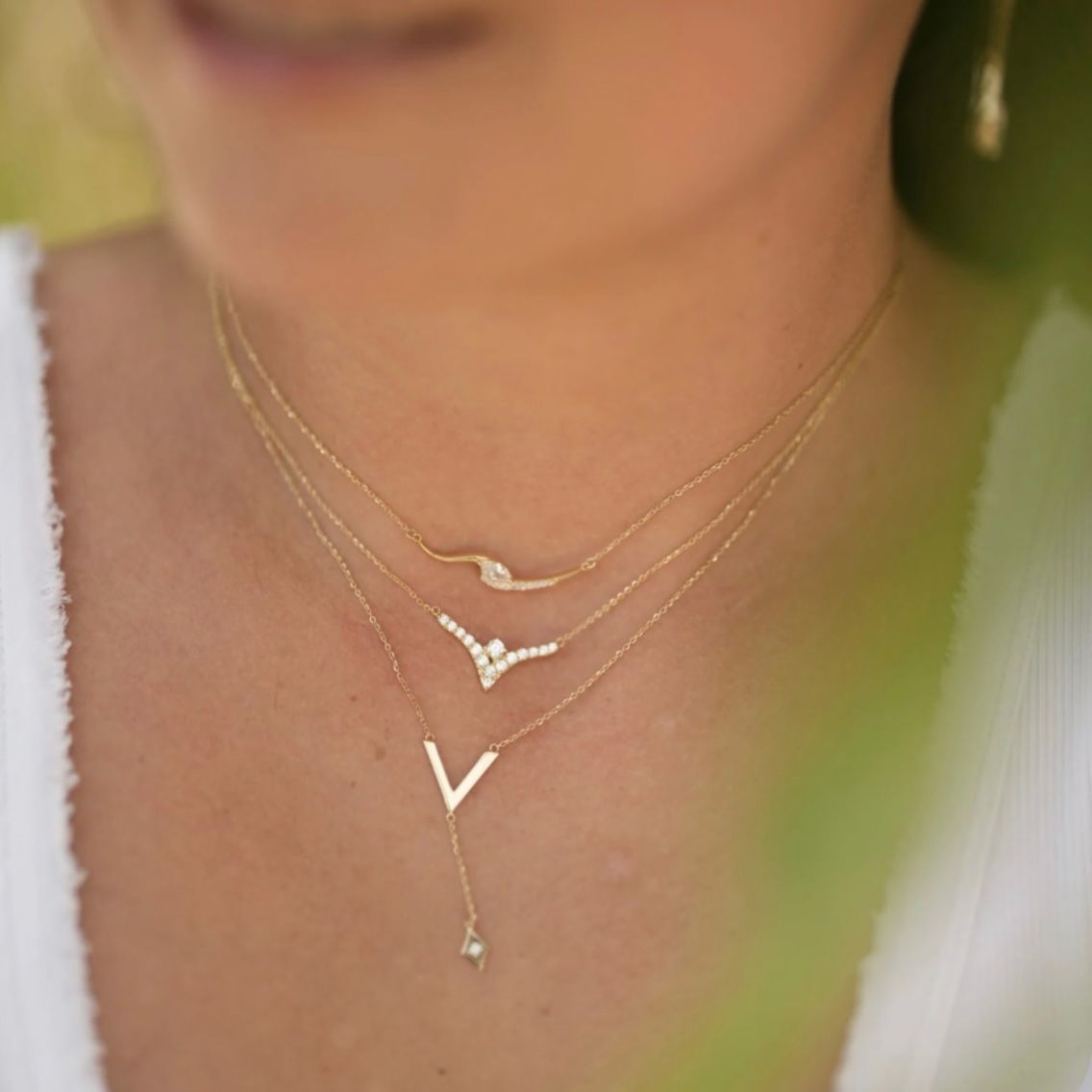
Layering is the easiest way to make fine jewelry feel personal. A few delicate chains, worn together, say more than one statement piece ever could — and you can change the story every day. Here's how we think about it.
1. Start with an anchor
Choose one piece that leads the look: a chain with a pendant, a pavé detail, or a stone that catches the light. Everything else is there to support it, so keep the other chains simpler.
2. Vary the lengths
Necklaces that sit at the same length tangle and compete. Leave a little space between each one — a few centimetres is enough — so every chain falls on its own line. A short chain close to the collarbone, a middle layer, and one slightly longer is a reliable starting point.
3. Mix textures, keep one metal
Pair a smooth snake chain with something finer, or a chevron with a single drop. Different textures add depth, while sticking to one tone of gold keeps the look calm and intentional.
4. Think about your neckline
- Crew necks and high collars: keep layers short and close, sitting just above the fabric.
- V-necks and open shirts: let the layers follow the shape, with the longest chain pointing down the V.
- Strapless and off-the-shoulder: this is where a full layered stack really shines.
5. Three is the magic number
Two chains can look accidental; four can start to feel busy. Three layers give balance without effort — which is why we designed three necklaces to sit together: the Curved Marquise, the V-Bird and the V-Pendant. Each is sold separately, so you can start with one and build your stack over time.
Finishing touches
Once your necklaces are set, echo them elsewhere: a slim bracelet like the Seahorse Pearl Bracelet or a stacked ring ties the look together. And when you take them off, store them separately so the chains don't knot.